A 'Make in India' Initiative Transforming Biological Waste into Sustainable Energy.
In line with India’s ‘Make in India’ initiative, which emphasizes sustainable development and innovation in domestic industries, Raut Serums India Pvt. Ltd. (RSIPL) has embarked on a groundbreaking project to generate biogas and electricity from horse dung.
With the growing need for renewable energy and eco-friendly waste management solutions, this project demonstrates the effective utilization of biological waste as a sustainable energy source, leading the way for eco-friendly pharmaceutical operations.
Sustainable waste management sourced from our premium equine breeding farm.
Transforming biological waste into clean methane and electricity.
Powering critical operations at our serum manufacturing facilities.
Horse dung, often seen as a waste byproduct, holds significant potential for biogas generation due to its organic content. Rich in cellulose and other biodegradable materials, horse dung undergoes anaerobic digestion.
This microbial process occurs where specialized bacteria break down the organic matter in an oxygen-free environment. This digestion captures gases that would otherwise escape into the atmosphere, creating a reliable stream of clean fuel.
"The resulting biogas is primarily composed of Methane (CH₄) and Carbon Dioxide (CO₂), which can be efficiently captured and used as an alternative energy source."
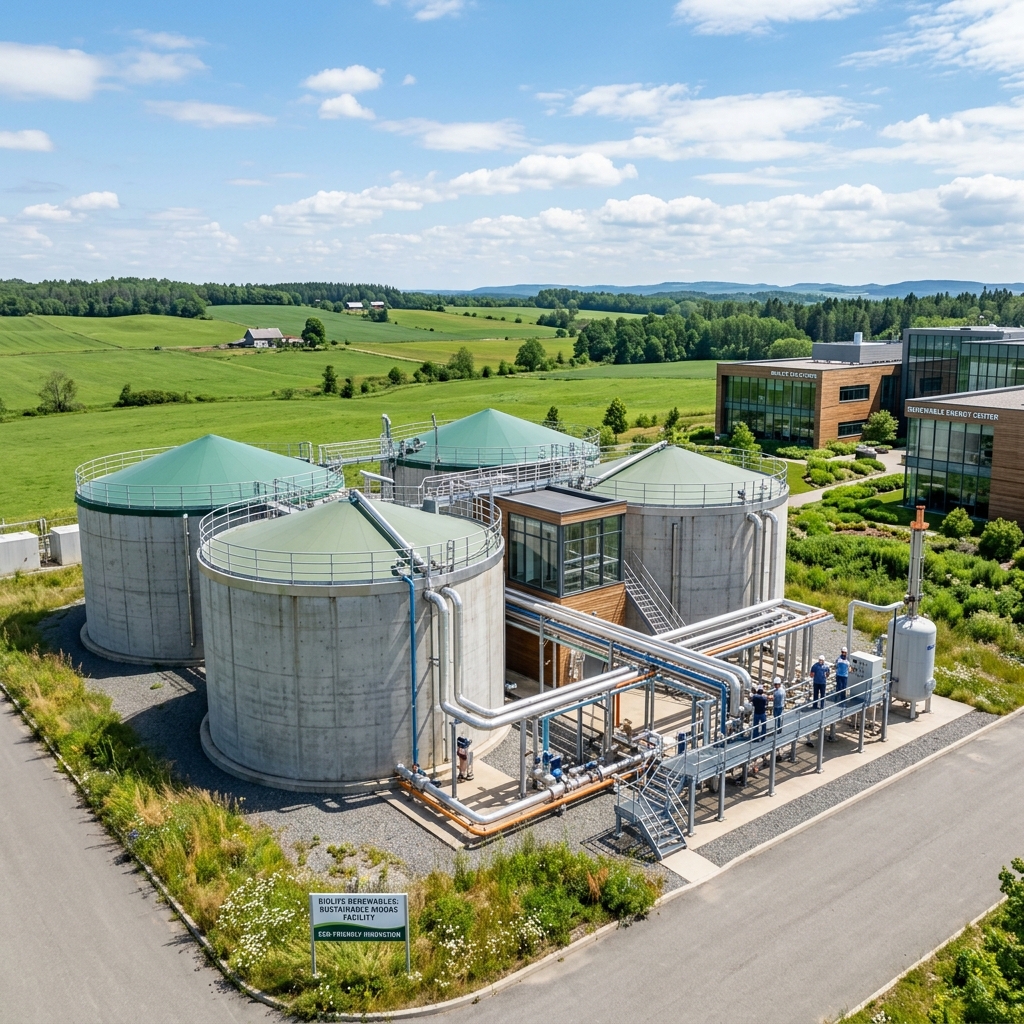
Designed with an emphasis on efficiency and sustainability, our system ensures structured waste management from collection to grid-independent power generation.
Horse dung is collected from our equine farm, where over 1,500 horses are housed. The dung is mixed with water and subjected to pre-treatment to remove any non-biodegradable contaminants.
The pre-treated dung is fed into an anaerobic digester, where microorganisms break down the organic matter in the absence of oxygen. The digester operates under controlled conditions, optimizing temperature, pH, and retention time to maximize methane production.
The biogas produced is collected and stored in a gas holder. The methane content of the biogas is monitored to ensure a high-quality energy source.
The captured biogas is used to fuel gas engines, which in turn generate electricity. This electricity is utilized to power various operations at RSIPL’s manufacturing plant, contributing to energy self-sufficiency.
By converting horse dung into biogas and electricity, RSIPL is addressing two critical challenges: waste management and energy generation.
Methane, a potent greenhouse gas, is captured during biogas production, preventing its release into the atmosphere and reducing the overall carbon footprint.
The biogas produced serves as a clean and renewable energy source, reducing the reliance on fossil fuels for electricity generation.
The byproduct of anaerobic digestion, known as digestate, is a nutrient-rich organic fertilizer that can be used in agricultural applications, enhancing soil health and reducing the need for chemical fertilizers.
RSIPL’s biogas and electricity generation project aligns with India’s Sustainable Development Goals (SDGs), promoting eco-friendly waste management practices.
Contributing to India’s renewable energy targets by showcasing how animal waste can be transformed into affordable, clean, and reliable industrial power.
Actively capturing methane greenhouse gases and using biological power offsets, reducing reliance on conventional fossil fuels.
The success of this biogas initiative opens doors for future expansion, not only in terms of increased biogas production capacity but also in the development of similar waste-to-energy projects using other agricultural and animal waste.
RSIPL aims to be a model for other industries seeking to reduce their environmental impact while generating sustainable energy, demonstrating how biological waste can become a driver of India’s renewable energy revolution.